
Inside IntrCity’s INR 1,000 Cr Odyssey
When Thirukkurungudi Vengaram Sundram Iyengar, the Indian industrialist who founded the TVS Group, introduced intercity passenger bus service in Tamil Nadu in 1912, India barely had any organised bus services. At the time, most people relied on trains for long-distance travel and bullock carts for shorter routes, while motor cars were accessible only to a wealthy few.
Today, 40% of India’s road-based travel demand comprises buses. While a large part of this percentage consists of unorganised, local players, tech-driven companies are determined to bring further sophistication and impact in this segment.
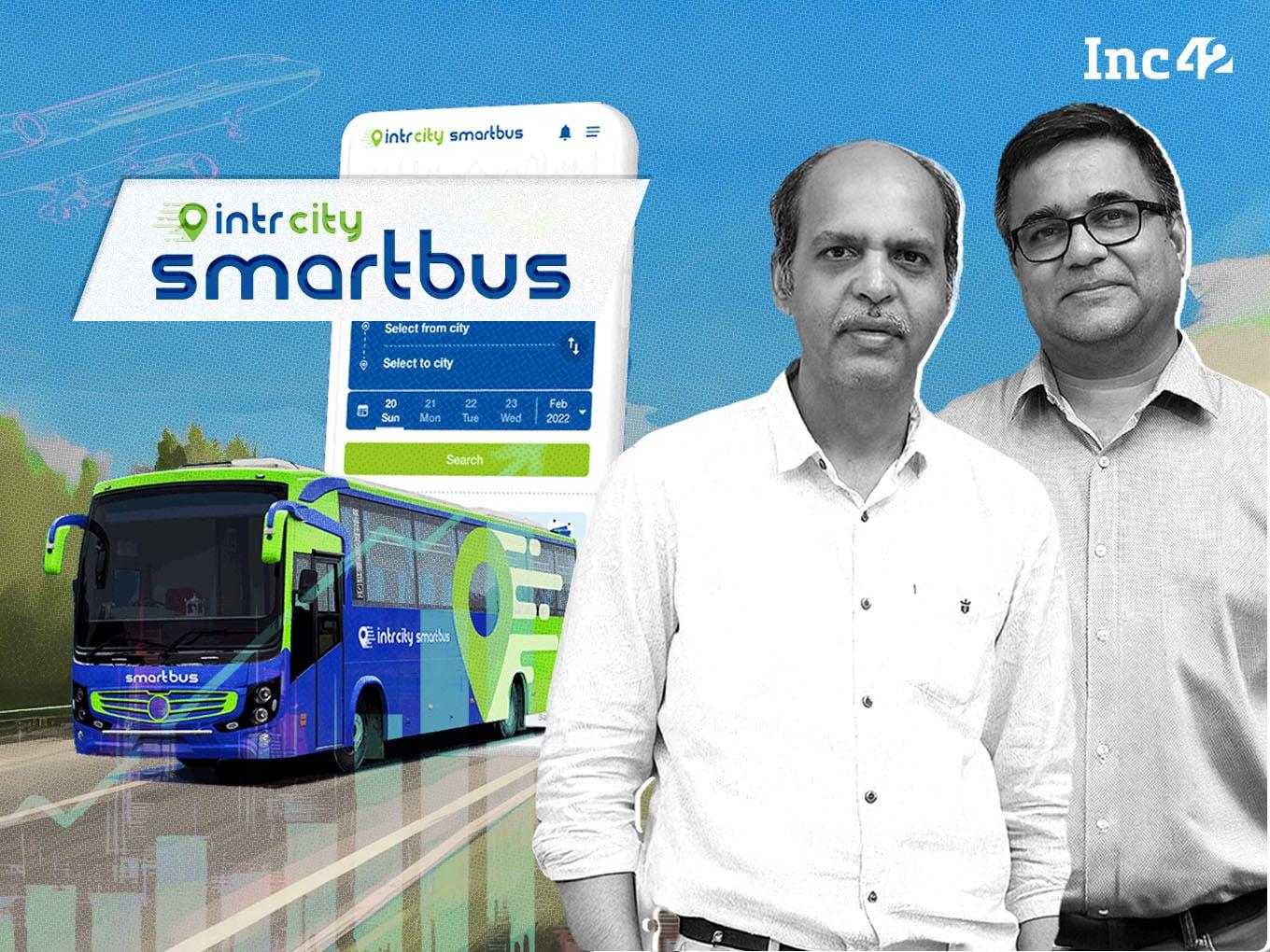
IntrCity SmartBus is one such platform that takes inspiration from railways to run intercity buses across India with a promise of convenience, comfort and safety.
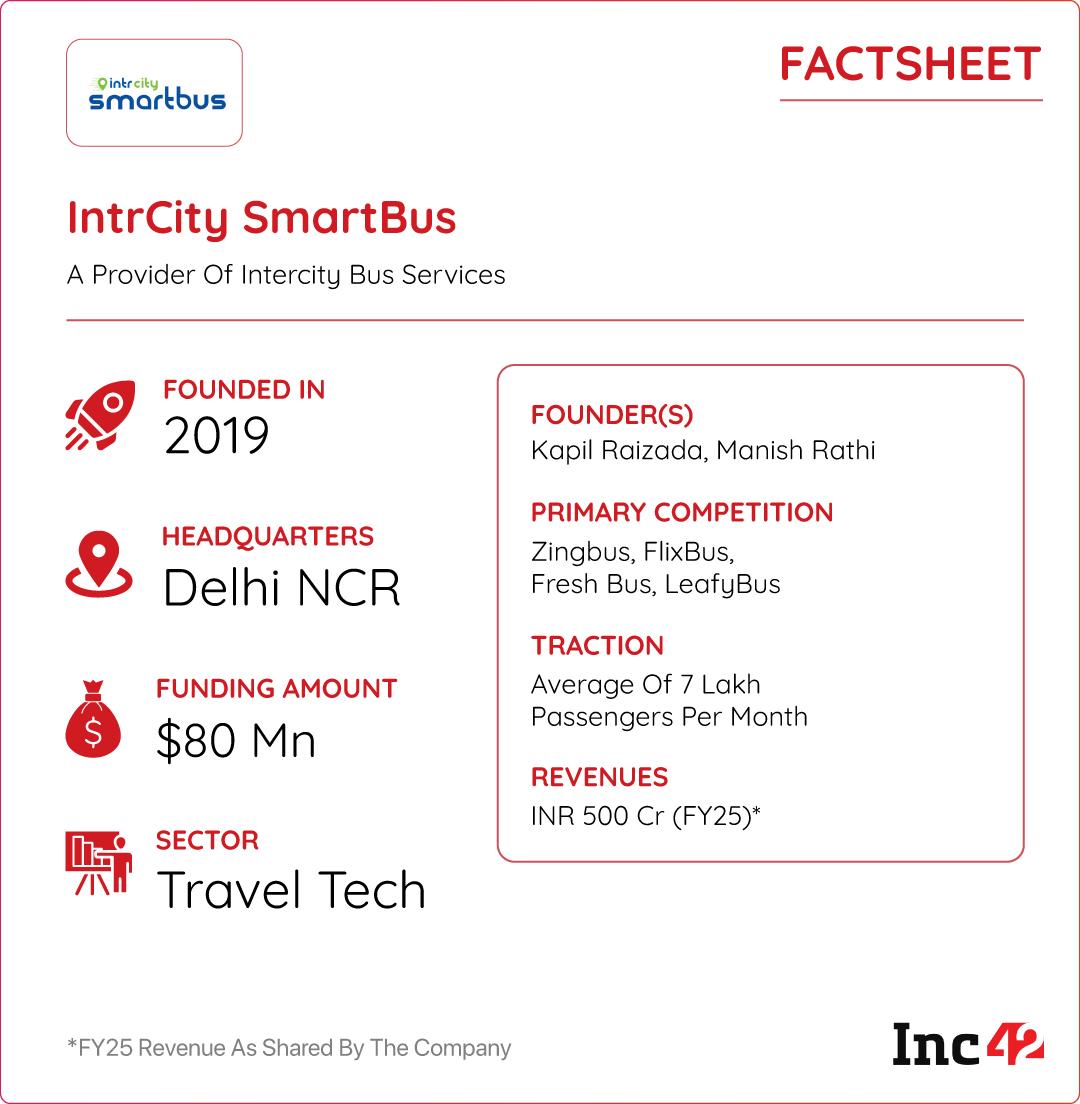
Started in 2019 by RailYatri founders Manish Rathi and Kapil Raizada, IntrCity bridges the gap between travellers’ growing need for a reliable alternative to trains for inter- and intra-state travel and their rising expectations for comfort and convenience.
“Our bus service promises basic things like cleanliness, punctuality, good behaviour of staff, and a washroom,” said Rathi, the founder and CEO of IntrCity.
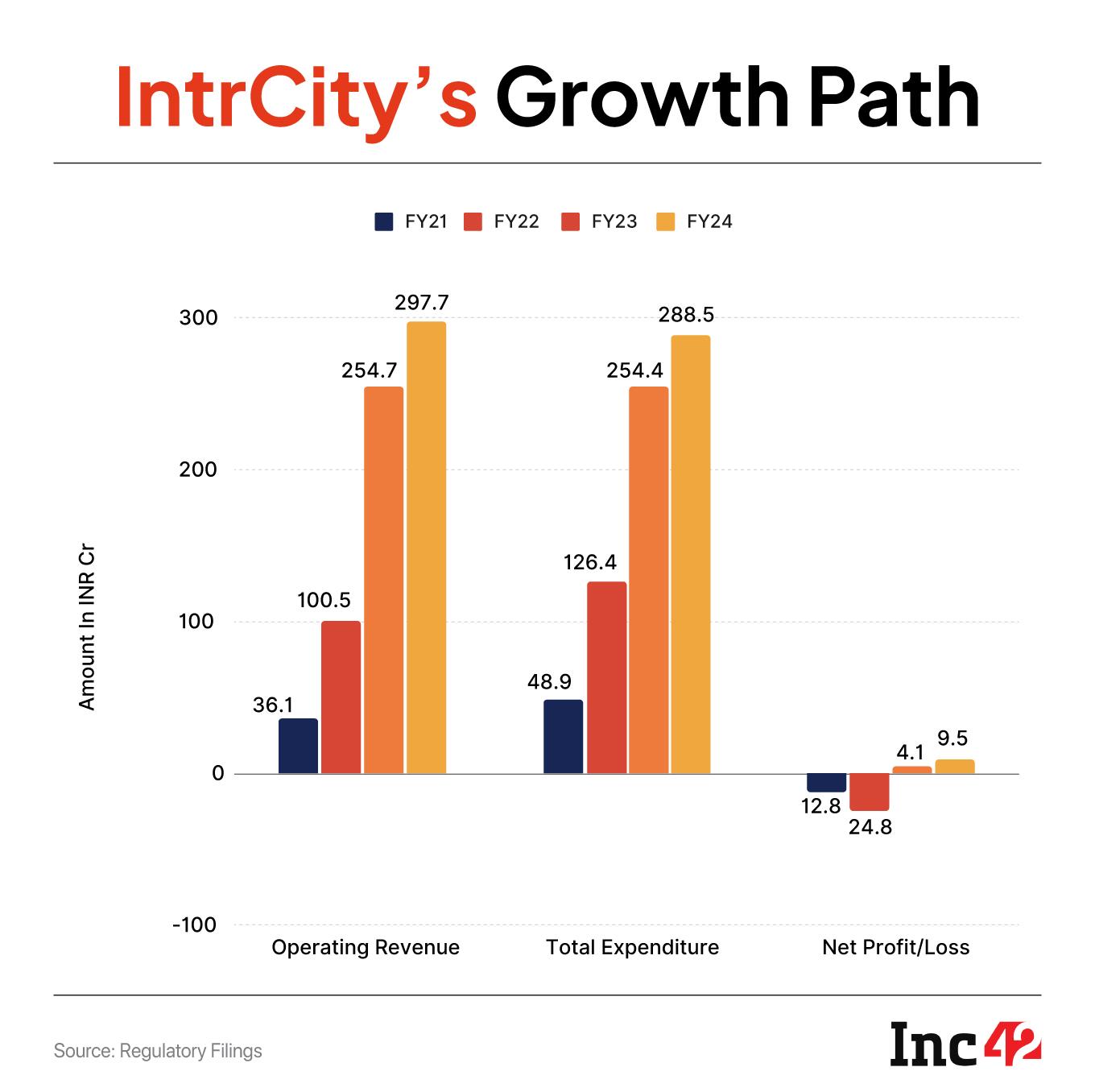
Having been hit by the Covid-19 pandemic within a few months of its launch, the founder today claims to have surpassed the INR 500 Cr revenue mark in FY25, with nearly 650 operational buses running across 17 Indian states. IntrCity’s revenue from operations stood at INR 317.3 Cr in FY24 as compared to INR 273.9 Cr in FY23.
But behind the rainbow of fancy numbers is an intriguing journey of IntrCity.
From Experiment To Expansion
IntrCity began in 2019 as a small experiment. At the time, Rathi and his team were running RailYatri, a train ticket booking platform. The idea took shape when Rathi wanted to create a solution for travellers who couldn’t secure confirmed train tickets.
They put their heads together and wrote algorithms to predict whether a train ticket would get confirmed or not. “When we found that any passenger had a very low chance of getting a confirmed ticket, we would give them an option to take a bus instead,” Rathi said
Within months, the founder saw an influx of people moving from trains to buses. This was when Rathi realised that there was a huge opportunity just waiting to be untapped, and launched the IntrCity platform.
But, as fate would have it, the pandemic hit the country before IntrCity could fully take off.
“Our revenues came crashing down when lockdowns were imposed during the first wave of the pandemic,” the cofounder said, adding that the second wave saw another massive blow.
Interestingly, right before the lockdowns, the startup had already raised more than INR 100 Cr in a Series B round from Infosys cofounder Nandan Nilekani and Samsung Venture Investment. Existing investors Omidyar Network and Blume Ventures also participated in the round.
So, despite the hiccups, the founder had cash and enough time to think.
And this made Rathi and his team realise that it was time to give an upgrade to the country’s bus travel industry, as more people were then looking for superior quality, tech-driven, and process-driven buses that would run in a more branded and professional manner.
The strategy has worked wonders.
From running around 84 buses right before the pandemic, the numbers have grown around 8X in the last few years. But the road to that growth hasn’t been straightforward.
Back in February 2020, the company wanted to run a fleet of 2,000 buses by 2022. Around September 2022, the platform was operating around 200 buses, 1,800 fewer buses than its initial targets, serving around 2 Lakh passengers per month.
This number today stands at 650+ fleet serving around 7 Lakh passengers a month.
Today, 55% of its revenue comes from the southern part of India, 20% from the North, and 15% from the West, and the rest from the other areas. IntrCity hasn’t yet properly penetrated into eastern India.
Over the years, IntrCity has leveraged the growing ecosystem of bus operators and their weaknesses to grow its business.
Rathi said that traditional bus operators that have assets on their books always find it challenging to scale beyond a certain point.
“If operators and players like us come together in a partnership model, it is much easier to scale and build up a better and standardised business in this ecosystem,” according to Rathi.
Under this partnership model, IntrCity manages all key aspects — from assessing demand and planning routes to optimising travel time and setting fares. Bus operators handle operational expenses such as fuel, tolls, driver and cleaner salaries, and other running costs.
IntrCity also covers certain fixed expenses, including those related to the bus captain and onboard technology. Excluding the costs, whatever net earnings remain are divided equally between the two parties.
“While the bus belongs to the operator, we ensure all the safety with our cloud-enabled, in-house bus operating system,” said Rathi.
IntrCity’s Tech Play
Speaking with Inc42, chief operating officer Aparajita Mukhopadhyay said, unlike conventional operators, who may adopt standalone tech features, IntrCity’s approach is to build an integrated ecosystem that connects passengers, buses, and operations in real time.
“Each IntrCity SmartBus is part of a connected fleet network that allows us to monitor each trip end-to-end. From IoT-enabled sensors that track speed, location, and vehicle health to CCTV surveillance and driver alert systems, every bus is digitally monitored to ensure safety and punctuality,” Mukhopadhyay said.
Besides live bus tracking for passengers, which many other local bus operators also offer, an IntrCity smartbus offers features such as digital boarding, AI-enabled route optimisation, dynamic seat allocation, and automated cleanliness checks, all aimed at delivering a better passenger experience.
The startup is heavily using AI both on the back-end for operational intelligence and the front-end for passenger experience.
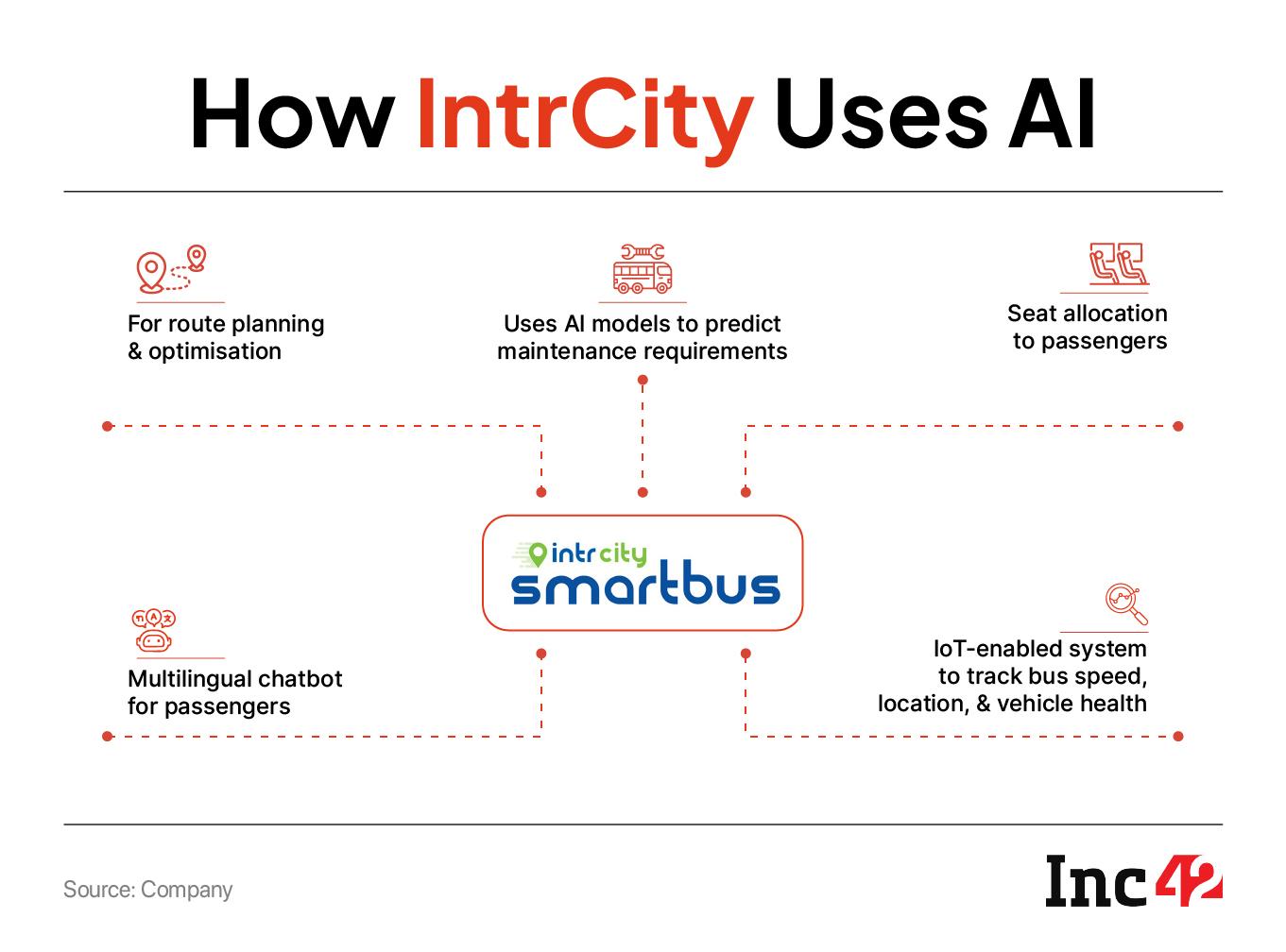
On the operational side, its AI models help IntrCity with predictive maintenance. This helps improve reliability and reduce downtime.
The startup has also integrated AI for better route planning and demand forecasting, which allows the company to optimise fleet deployment based on passenger flow, travel trends, and seasonality.
The INR 1,000 Cr Odyssey
IntrCity aims to close FY26 with a revenue of INR 700 Cr and cross the INR 1,000 Cr mark within the next 18–24 months.
To achieve this, the company plans to strengthen its network by connecting major tier I cities with tier II and tier III towns.
It follows a hub-and-spoke model centred around 16–17 key hubs that attract travel for work, healthcare, business, and education — and is already operational in about 14 of them.
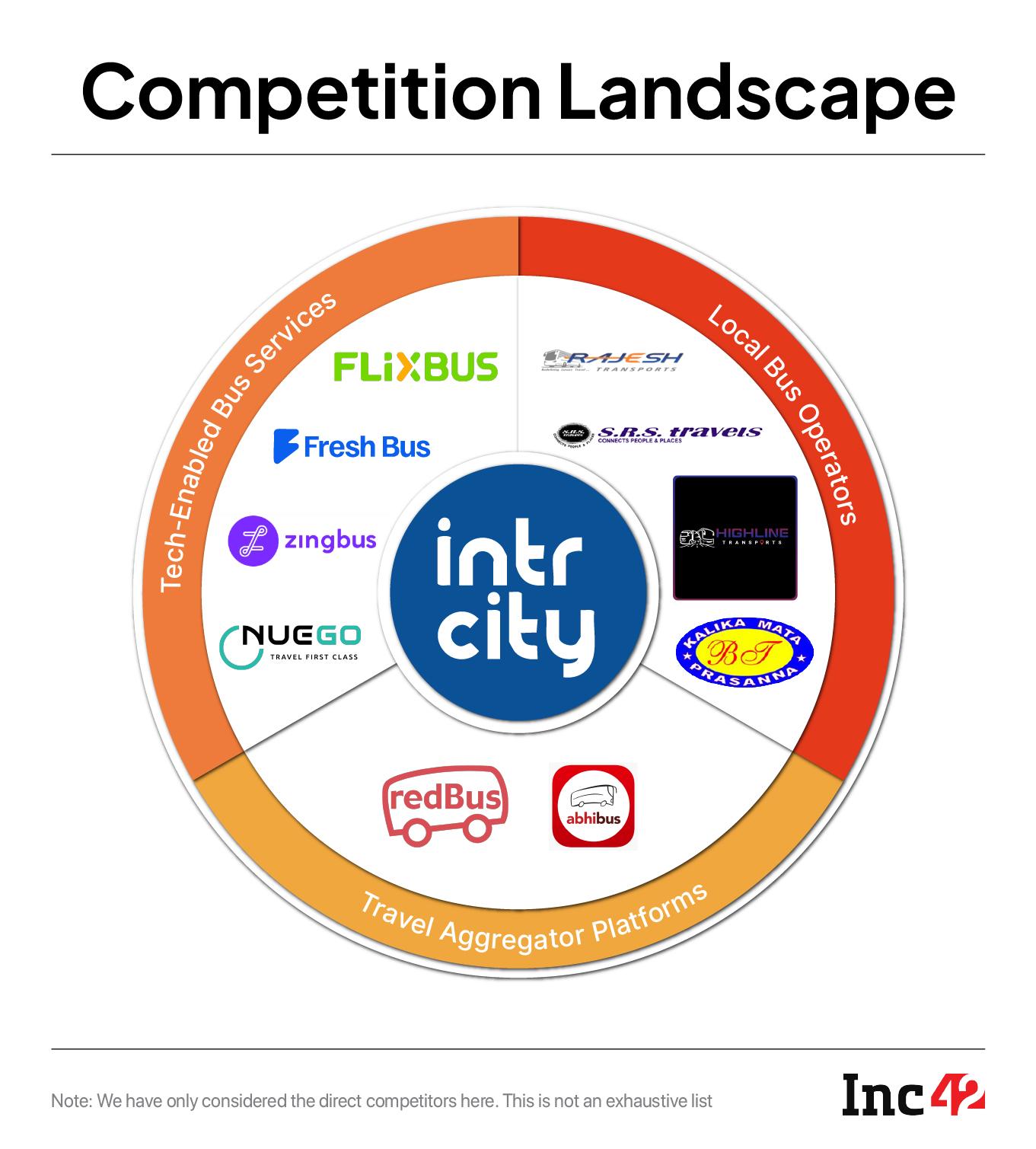
However, competition in this space is intensifying with the entry of players like NeuGo, FreshBus, and FlixBus. Staying ahead of the curve will require contact upgradation of tech and strategies.
As of now, the startup is doing a few pilots with EV buses but has no plans to launch an EV bus service immediately.
This is because EVs are still not as reliable and operationally efficient for the routes IntrCity buses run on. Besides, high cost is another reason why many bus operators are still unwilling to buy and run ebuses.
Nevertheless, the road ahead is clear for IntrCity, which wants to grow slowly and steadily. It is betting on its proprietary database to outrun new players and foreign companies like Flixbus. The company is currently flush with a war chest of $30 Mn, which it recently raised in a round led by A91 Partners at a valuation of $140 Mn.
For now, IntrCity is charting a steady course in India’s intercity travel space, combining technology, partnerships, and data-driven insights to scale sustainably. As it eyes the INR 1,000 Cr milestone, can it stay ahead in an increasingly competitive travel tech space?
[Edited By Shishir Parasher]
The post Inside IntrCity’s INR 1,000 Cr Odyssey appeared first on Inc42 Media.


No comments