
Centre To Soon Decide On Subsidy Scheme For Rare Earth Magnet Production
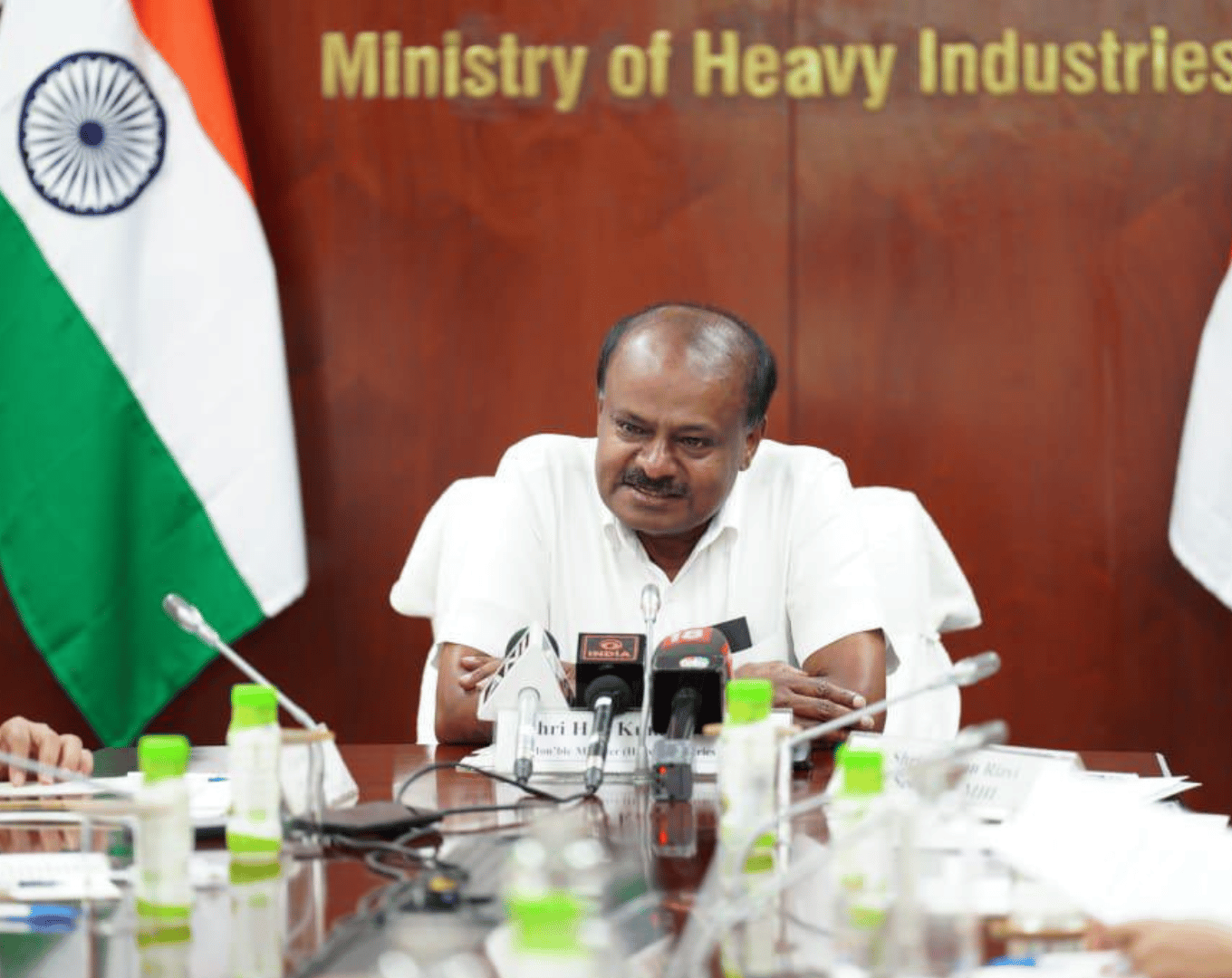
As panic over China’s ban on exports of rare earth metals, including magnets, grips automobile manufacturers, heavy industries minister (MHI) HD Kumaraswamy has said that the government will decide on a subsidy scheme to support domestic production of rare earth magnets within the next 15-20 days.
Speaking at the sidelines of a press briefing on the launch of ‘Scheme to Promote Manufacturing of Electric Passenger Cars in India’ (SPMEPCI), Kumaraswamy said that the MHI held discussions with mines minister Kishan Reddy on the scheme, and plans to announce the decision in the near future.
The ministers met to discuss the rare earth metals situation on June 17 in the presence of senior officials from MHI, steel ministry, mines ministry, commerce and industry ministry, and department of atomic energy.
“This inter-ministerial effort will pave the way for India’s self-reliance in strategic materials crucial for EVs, electronics, defence and other sectors,” Kumaraswamy said in a post on social media after the meeting.
Meanwhile, MHI secretary Kamran Rizvi said that if the proposed incentives under the scheme exceed INR 1,000 Cr, it will be sent to the Union cabinet for final approval.
“We do not know the quantum of subsidy required yet, stakeholder consultations are on, as the minister pointed out, so varied responses have come. Somebody wants 50%, somebody wants 20%, so it will be subject to a competitive bid, then we will know the quantum of support required,” the secretary noted.
Notably, the Centre was said to be looking at an INR 3,500 Cr to INR 5,000 Cr scheme to incentivise production of rare earth minerals and derived magnets within the country.. Last week, ET reported that the proposed scheme will be offered through a reverse bidding process.
Rare earth elements became a hot topic after China, which mines around two-thirds of global rare earth elements and processes about 90% of the world’s supply, implemented export restrictions on rare earth elements like samarium, gadolinium, terbium, dysprosium, lutetium, scandium, and yttrium.
Rare earth magnets are critical in EVs, wind turbines and other electronic devices. With the ban, Chinese export of rare earth magnets plunged 53% to 1,238 metric tonnes in the month of May, its lowest since February 2020, as per a report by Reuters.
With the magnet crunch in full effect, Indian automobile manufacturing companies are facing short to medium-term challenges, the extent of the impact remains uncertain. The likes of TVS Motor and Bajaj Auto have already flagged possible production delays.
While the automobile industry raised their concerns over the escalation of the situation, commerce minister Piyush Goyal emphasised that they should look at becoming more self-reliant in sourcing the elements, according to a source close to the development.
In line with this, these companies are said to have made presentations to the government over their plans to build supplies within India to reduce dependence on China. “The companies include Midwest Advanced Materials, Entellus Industries, and public sector Indian Rare Earths (IREL),” Times Of India quoted a source as saying yesterday.
In his press address today, the minister said that a Hyderabad-based company made a presentation about its plans to deliver 500 tonnes of rare earth magnets by this December.
It is pertinent to mention that India has the fifth-largest reserve of rare earth elements (REE), estimated at 6.9 Mn metric tonnes. However, the country has faced challenges in production and relies heavily on imports for certain critical REEs.
The Launch Of SPMEPCI
As mentioned earlier, the questions were fielded by the minister at the launch of the portal for SPMEPCI. The scheme, the guidelines for which were unveiled earlier this month, will allow global manufacturers to import completely built-in units (CBUs) of electric four-wheelers with a minimum CIF (cost, insurance and freight) of $35,000 at a reduced customs duty of 15% for a period of five years if they commit to invest INR 4,150 Cr (about $500 Mn) in India.
The companies availing the benefit of the scheme would have to set up a EV manufacturing unit and commence operations within a period of three years. They would have to attain a minimum domestic value addition (DVA) of 25% within 3 years and 50% within 5 years.
The maximum number of E4W allowed to be imported at the aforesaid reduced duty rate shall be capped at 8,000 per year.
The SPMEPCI application portal was opened today and will close on October 21, 2025. “The launch of this portal under the SPMEPCI scheme opens new avenues for global electric vehicle manufacturers to invest in India’s rapidly evolving automotive landscape. This scheme not only supports our national commitment to achieving Net Zero by 2070, but also reinforces our resolve to build a sustainable, innovation-driven economy,” the minister said.
During the launch, the minister was questioned again about EV giant Tesla’s India plans. He reiterated that the company is only interested in opening a showroom and selling cars currently.
[Edited by: Vinaykumar Rai]
The post Centre To Soon Decide On Subsidy Scheme For Rare Earth Magnet Production appeared first on Inc42 Media.


No comments